

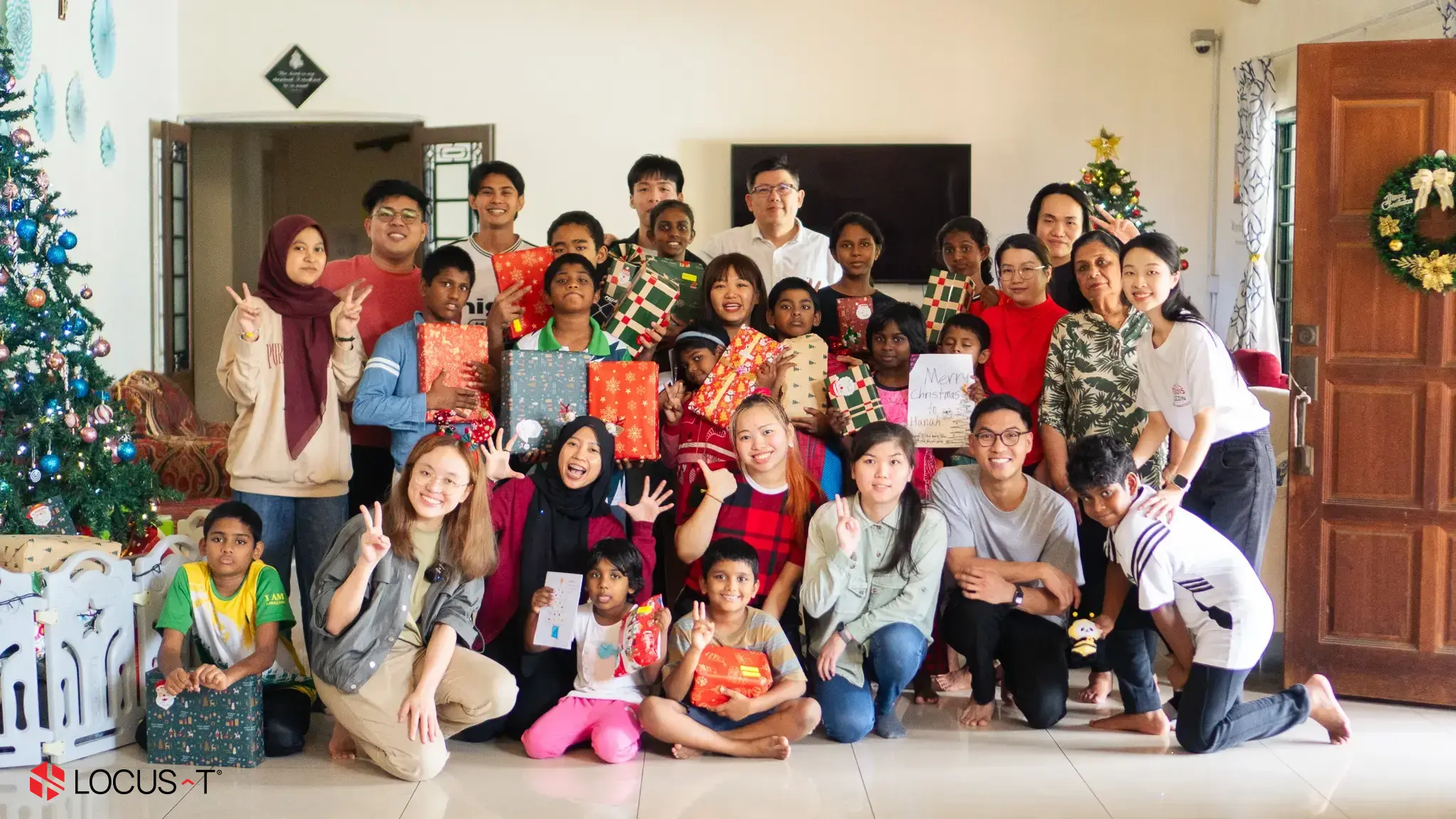
On 17 December 2025, 16 of us from LOCUS-T walked into a place that quietly reshaped our understanding of gratitude, responsibility, and humanity. What was planned as a year-end CSR visit became a moment of reflection that stayed with us long after we left.
That day, we visited Rumah Kanak-kanak Triniti, a children’s home we discovered through online research. An article we read spoke about their background and the constant challenges involved in sustaining daily life at the home. As we learned more, we realised this was not just a home in need of donations, but a story in need of understanding. With Christmas approaching, we felt this was the right time to show up, not only with gifts, but with presence.
A Day of Joy, Play, and Togetherness
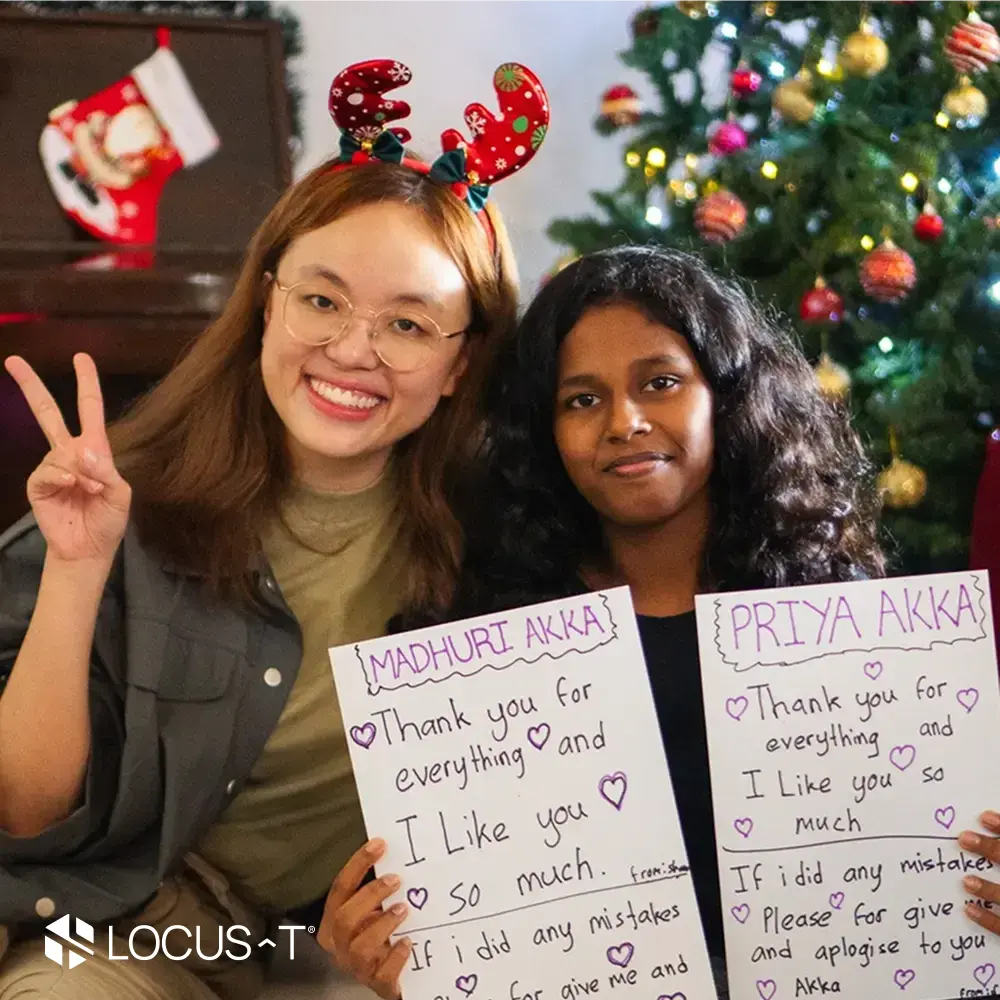
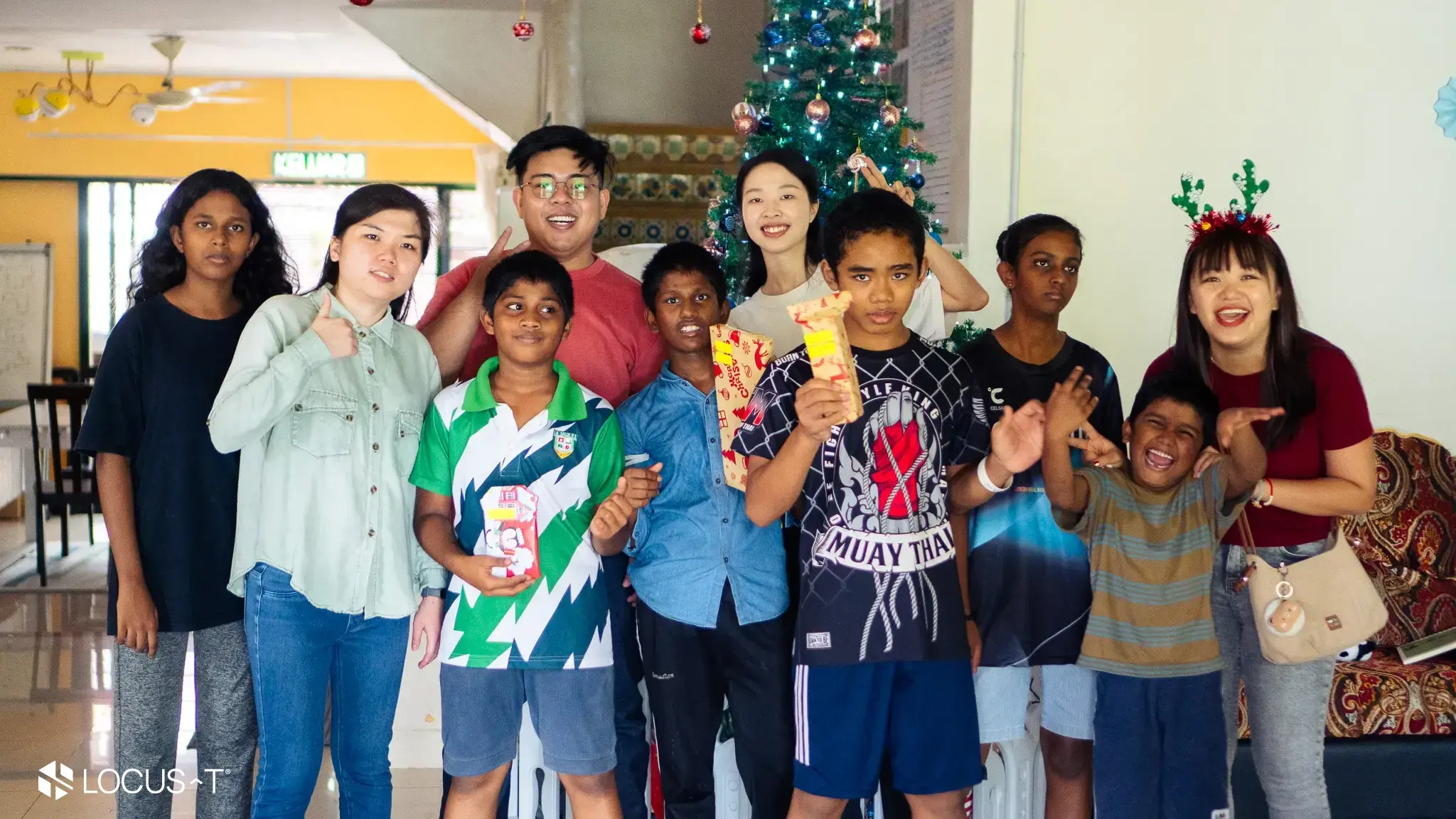
During our visit, we focused on building genuine connections with the children. We brought Christmas gifts, played games together, shared laughter, and had lunch as one big family. The most meaningful part of the day was the sense of bonding. For a few hours, titles and roles disappeared. What remained was joy, care, and togetherness.
The children were cheerful and full of life, filling the home with laughter and energy. Their openness and positivity left a deep impression on every volunteer. It was a reminder that joy can exist even in difficult circumstances, though it does not take away the challenges they face.
The Heart Behind the Home: Helen
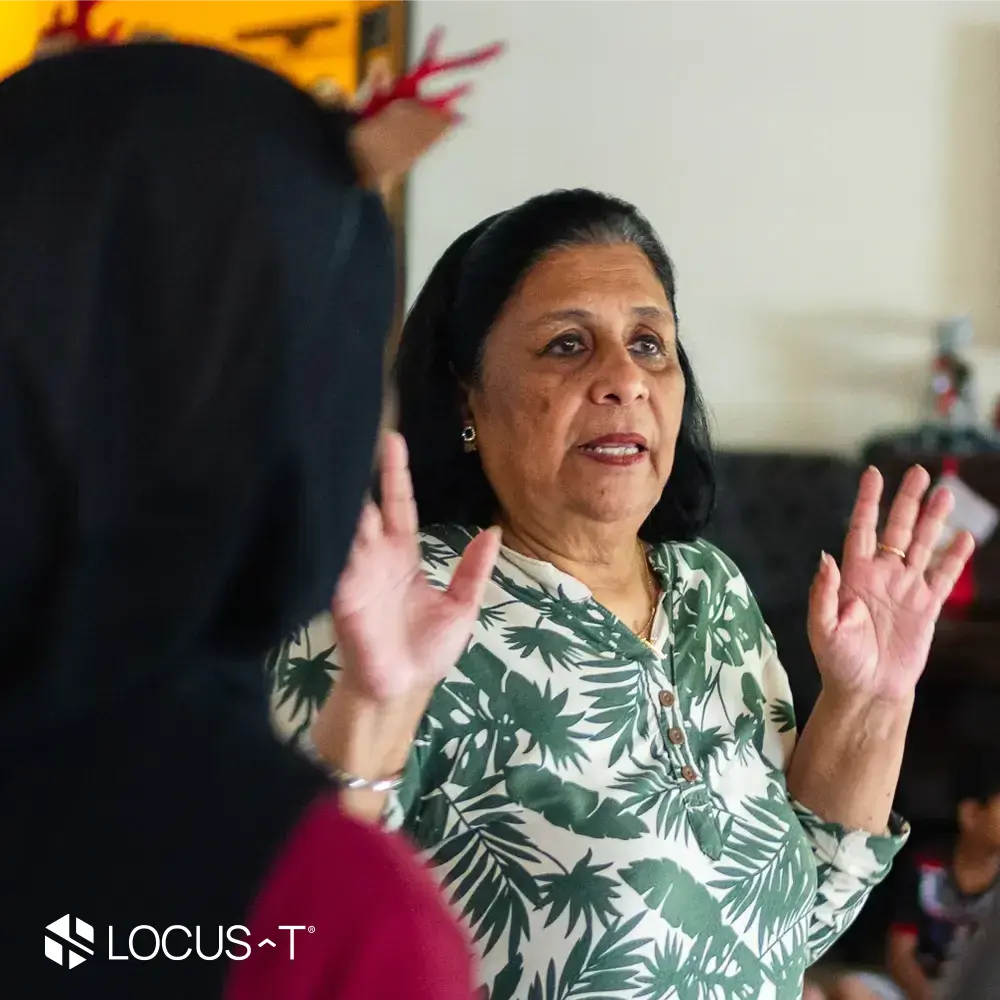 At the centre of this home is Helen, whose empathy and personal experiences led her to establish Rumah Kanak-kanak Triniti.
Helen understands what it means for a child to grow up without parents, without certainty, and without a sense of safety. Instead of turning away from this reality, she chose to lean into it and create a place where children could feel protected, cared for, and guided as they grow.
Her role goes far beyond daily supervision. She provides emotional stability, guidance, and a sense of belonging that many of the children have never experienced before. To the children, she is not just a caretaker. She is their “mother”.
What We Rarely Talk About: Orphans and Identity
Court-Certified Orphans
Some children are abandoned at birth and later found by authorities. These children are brought to court, officially certified as orphans, and placed in recognised homes like Triniti. Because they grow up in the home from infancy, many develop psychologically like any other child. They know where they belong.
Legally, these children are also able to obtain official documents such as a birth record and an identity card. They are recognised by the system, which allows them access to education, healthcare, and future opportunities.
Children Without Court Certification
However, not all orphaned children go through this process. When a child is not certified by the court, they are not legally recognised. As a result, they cannot obtain a birth certificate or an identity card (IC).
Without an IC, these children face serious limitations in life. They struggle to access education, employment opportunities, healthcare, and the ability to plan a stable future. They grow up invisible, not because they do not exist, but because the system does not see them. This reality rarely appears in headlines, yet it shapes the rest of a child’s life.
When Home Is Taken Away Twice
Another group of children are those who were born into families but later sent away or adopted by other households. In some unfortunate cases, they were abused by their adoptive families until authorities intervened.
These children return to orphanages carrying fear instead of trust. Psychologically, they struggle much more. They are cautious with people, slow to open up, and need time, patience, and emotional safety. At Triniti, there are currently two children from this background. Their smiles may look the same, but their healing journeys are very different.
Supporting the Transition Beyond the Home
Under current regulations in Malaysia, children are required to leave orphanages when they reach the age of 18. This marks a formal transition point for young people in care.
Even after they leave the home, Helen continues to support them in practical ways. She actively looks for sponsors, guidance, and opportunities to help them continue their education or develop useful skills. Recently, two young adults who turned 18 received support through external sponsorships to continue their studies at vocational institutions. These opportunities help them gain practical skills and confidence as they begin the next chapter of their lives.
Daily Struggles Behind the Smiles
Today, Rumah Kanak-kanak Triniti cares for around 20 children. From daily routines to schooling and personal development, running a children’s home requires continuous effort, planning, and resources.
Support for the home comes mainly from individuals, organisations, and companies who step forward to contribute at different times of the year. While life at the home appears lively and positive, sustaining this environment involves ongoing challenges that are not always visible from the outside.
Every month requires resilience, careful management, and strong community support.
How You Can Help
For those who wish to extend their support to Rumah Kanak-kanak Triniti, any contribution can make a meaningful difference.
Those who would like to donate or offer assistance may contact the home directly:
📞 Contact: 012-727 0352 (Helen)
We hope this story creates reflection. Reflection on how much we have, on communities that struggle quietly, and on the responsibility we carry, not just as a company, but as people.
This visit reminded us that gratitude grows when we truly see others. And when we see clearly, we find it difficult to look away.